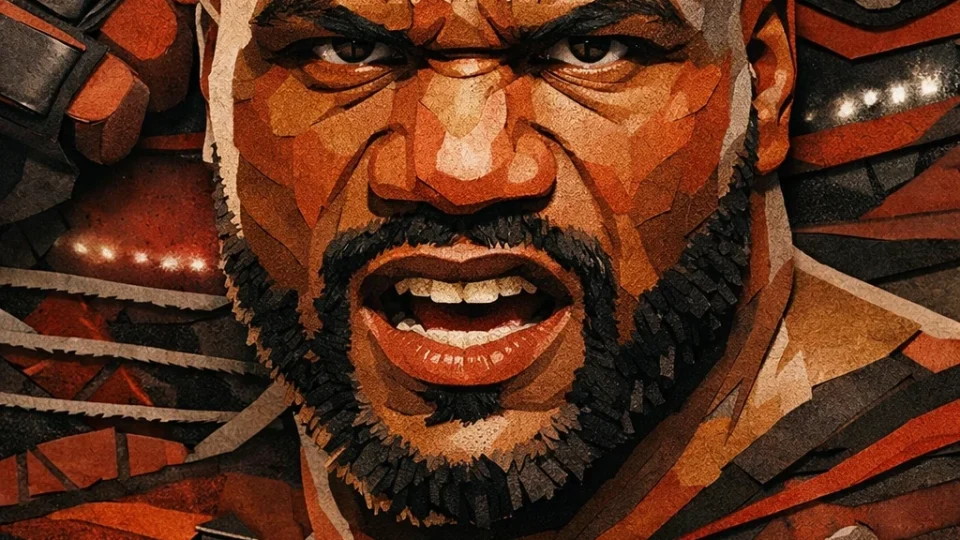
Who Is Rampage Jackson?
Quinton Ramone Jackson, better known as “Rampage” Jackson, is an American combat-sports figure whose MMA career took him from smaller United States shows to Pride and the UFC’s light heavyweight championship. Born on June 20, 1978, Jackson became known through a sequence of high-profile fights rather than a career confined to one promotion or one opponent.
His professional identity extends beyond mixed martial arts. Jackson is a former mixed martial artist as well as an actor, kickboxer, professional wrestler and online streamer. That range matters when placing his fighting career in context: MMA made his name, but it is only one part of his public work.
Within MMA, the clearest way to understand Jackson is through progression. He established himself in early American competition, entered Pride in 2001, reached the final of Pride’s 2003 Middleweight Grand Prix, and later won the UFC Light Heavyweight Championship. Along the way, fights with Kazushi Sakuraba, Chuck Liddell, Wanderlei Silva and the Rua brothers gave his career much of its defining shape.
Jackson’s “Rampage” nickname is inseparable from his fighting image, but his record also reflects the changing structure of elite MMA in the 2000s. He competed in American regional promotions before making a major move to Japan, then returned to the United States for the UFC stage that delivered his best-known title victory.
The Early MMA Record and Competitive Profile
Before competing in Pride, Jackson had built a 10–1 record in smaller American MMA promotions. His early run included appearances in King of the Cage, Gladiator Challenge and Dangerzone. That record established the platform for his 2001 move into Pride, where he would face a much more prominent level of opposition.
A complete current professional MMA record is not established here, so it would be misleading to present a career-total tally of wins, losses, draws or no contests as definitive. The documented 10–1 figure applies specifically to his pre-Pride period in smaller American promotions, not to his full career.
Likewise, a current listed division, height, reach and fighting stance are not set out in the available career details. The supplied weight-class context is historical: Jackson competed for Pride’s Middleweight title, a championship contested at 205 pounds, or 93 kilograms. In Pride terminology, that positioned him in the promotion’s middleweight class, despite 205 pounds being associated with light heavyweight in the UFC.
That distinction is useful when reading older MMA records. Promotion labels did not always use the same division names, so Jackson’s Pride middleweight campaigns and UFC light heavyweight title run should be understood through the rules and classifications of their respective organisations.
From US Promotions to Pride
- Early American run: Jackson compiled a 10–1 record in smaller promotions, including King of the Cage, Gladiator Challenge and Dangerzone.
- Pride debut, 2001: He entered Pride at Pride 15 against Kazushi Sakuraba, losing by rear-naked choke.
- 2003 Grand Prix: Jackson defeated Murilo Bustamante in the opening round and Chuck Liddell in the semi-finals, then lost to Wanderlei Silva in the final of Pride’s Middleweight Grand Prix.
The UFC Championship Breakthrough
Jackson’s route to the UFC followed a business shift rather than a conventional debut signing. His UFC contract was acquired by Zuffa when it purchased selected World Fighting Alliance assets on December 11, 2006. That move placed him in the promotion where his rivalry with Chuck Liddell would reach its most consequential point.
- December 11, 2006: Zuffa acquired selected World Fighting Alliance assets, including Jackson’s UFC contract.
- May 26, 2007: At UFC 71, Jackson challenged Chuck Liddell for the UFC Light Heavyweight Championship.
- Title-winning finish: Jackson stopped Liddell by referee stoppage at 1:53 of the first round to become UFC light heavyweight champion.
The UFC 71 victory carried added weight because Jackson and Liddell had met previously in Pride’s 2003 Middleweight Grand Prix. In that semi-final, Jackson defeated Liddell by corner stoppage. Their 2007 rematch therefore connected two major stages of Jackson’s career: his breakthrough years in Pride and his championship breakthrough in the UFC.
Winning the UFC belt was the central championship achievement of Jackson’s MMA career. It was not simply a title shot against a leading opponent; it was a return meeting with a fighter he had already beaten on the Pride stage. The result gave Jackson a defining accomplishment in the UFC’s light heavyweight division and made the Liddell series a major thread in his career story.
Key Achievements and Landmark Opponents
Jackson’s documented achievements are best read as a set of connected milestones. Before his UFC title win, he reached the final of Pride’s 2003 Middleweight Grand Prix by beating Murilo Bustamante and Chuck Liddell. He then faced Wanderlei Silva in the final while pursuing Pride’s Middleweight title, losing to Silva.
That tournament placed Jackson alongside several of the era’s leading names and established a sequence that continued to matter when he moved to the UFC. His later victory over Liddell at UFC 71 turned a Pride Grand Prix opponent into the opponent of his biggest championship night.
Other notable bouts include his split-decision win over Murilo “Ninja” Rua and his TKO loss to Rua’s brother, Shogun Rua. These are important landmarks in the documented career, although they should not be treated as a complete account of every rivalry, rematch or major opponent Jackson encountered.
Jackson also won an MMA title in a title shot against Rocko Hammerhands Henderson. Taken together, his title success, Grand Prix final appearance and bouts with Liddell, Silva, Bustamante and the Rua brothers show a career repeatedly shaped by elite opposition across different stages of the sport.
Rampage Jackson Beyond MMA
Jackson’s public career has not ended with MMA. He has worked as an actor, kickboxer and professional wrestler, and he is also an online streamer. Those roles help explain why he remains recognisable beyond the audiences that followed his Pride and UFC fights.
Specific acting productions, wrestling organisations, streaming platforms and dates are not necessary to understand the broader point: Jackson has continued to work across combat sports and entertainment rather than being known solely as a former UFC champion.
Public Channels
No official or verified social-media accounts or video channels are identified in the established career information used for this profile. Readers looking for current public accounts should rely on verification markers on the relevant platform and take care with pages using Jackson’s name, nickname or image without clear confirmation of ownership.