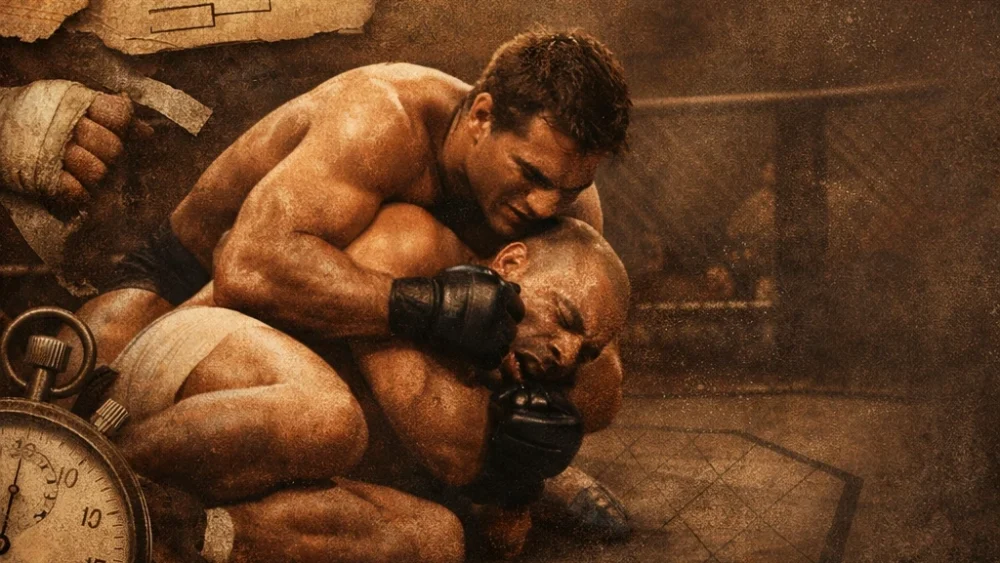
UFC 3: The American Dream at a glance
UFC 3: The American Dream was a mixed martial arts event promoted by the Ultimate Fighting Championship in 1994. Originally titled The Ultimate Fighting Championship III, it later became known as UFC 3: The American Dream. It centred on an eight-man tournament conducted under the unusually open conditions of the early UFC: no weight divisions, no weight limits, no rounds and no time limit.
That matters because the event should not be confused with EA SPORTS UFC 3, the fighting video game that includes a G.O.A.T. Career Mode. The shared name can make a simple search misleading. This guide concerns the historical MMA event, its tournament rules and the documented changes that shaped its course.
UFC 3 also captures an early stage in the promotion’s development. The format still placed fighters of different sizes into a single elimination tournament, but the event introduced a clearer role for the referee in ending a contest. Its story is therefore not only about the bouts that went ahead, but also about injuries, replacements and a scheduled fight that never began.
When and where UFC 3 took place
UFC 3 took place on September 9, 1994, in Charlotte, North Carolina. The date and city are consistent across the event material associated with the card.
The specific building is less straightforward. Records connected with the event identify different Charlotte venues, so it is safest to identify UFC 3 by its confirmed date and city rather than attach a single venue name with certainty. For readers trying to place the show historically, the essential point is that it was a Charlotte event held in September 1994, during the UFC’s first years as a promotion.
This distinction is worth keeping in mind when looking at old event listings. Early MMA records can preserve the central details of an event while differing on an individual field such as the arena. That does not change the identity of UFC 3, but it does mean a precise venue label should be treated carefully.
How the eight-man tournament worked
UFC 3 used an eight-man tournament. The winner’s prize was $60,000, giving each entrant a direct incentive to progress through a format that demanded more than one successful appearance. The tournament structure was single-elimination in practical terms: a fighter needed to keep advancing, while withdrawals or inability to continue could alter the path through the field.
There were no weight classes and no weight limits. Fighters were not separated into modern-style divisions, so the tournament could create substantial physical mismatches. The rules did not impose rounds or a time limit either. A contest continued until it produced a recognised finish, rather than ending after a scheduled number of minutes and moving to scorecards.
Because there were no rounds or time limit, judges were not used. The available ways to win were submission, knockout, referee stoppage or an opponent’s corner throwing in the towel. Those options put the emphasis on a decisive end to the contest rather than points accumulated over time.
The referee’s authority was especially significant at UFC 3. It was the first UFC event at which the referee had the power to stop a fight. “Big” John McCarthy served as referee, and that authority added a formal route for a contest to end when continued action was no longer appropriate. In a tournament with no time limit and no judges, referee intervention was not a minor procedural detail; it was part of the event’s core competitive framework.
The result was a very different sporting environment from a modern UFC card. There were no divisional limits to organise matchups, no rounds to reset the action and no judges waiting to decide an unfinished fight. A fighter could advance by forcing a clear outcome, but the physical cost of doing so could also affect what happened later in the tournament.
Competitors, replacements and scheduled matchups
The surviving event details identify several competitors and planned pairings, but they do not establish a complete roster or full first-round bracket. What is clear is that injuries had a major effect on the tournament field.
Keith Hackney competed in the UFC 3 tournament but later withdrew through injury. Felix Mitchell replaced him after that withdrawal. Ken Shamrock was also entered, but injury prevented him from continuing, and Steve Jennum was brought in as his replacement. These changes were consequential because an eight-man tournament depended on who remained able to advance from one stage to the next.
One recorded event-card listing pairs Leopoldo Martins with Royce Gracie. Another lists Ken Shamrock against Felix Lee. The latter name should not automatically be treated as identical to Felix Mitchell: the available information records both names, but does not establish whether they referred to the same person. It is therefore more accurate to retain the pairings as documented than to force them into a reconstructed bracket.
Royce Gracie was scheduled to face Harold Howard. That matchup became one of the event’s defining developments, although it did not proceed as a contest. Before the fight, Gracie’s corner threw in the towel. Howard consequently advanced without fighting him.
Steve Jennum’s role is similarly important to understanding the card. He was not simply another listed name in an intact tournament lineup; he entered after Shamrock could not continue because of injury. The replacement dynamic shows how quickly the event could change once competitors were unable to carry on.
Rather than viewing UFC 3 as a neat, fixed bracket from opening bell to final, it is better understood as a tournament shaped by the available field at each stage. The documented names, withdrawals and substitutions explain why the event cannot be reduced to a static list of planned matchups.
What happened in the tournament
The clearest documented tournament developments concern advancement and replacement. Harold Howard moved directly into the final by bye after Royce Gracie’s corner threw in the towel before their scheduled fight. That was an advancement without a contested bout, and it altered the route to the final immediately.
Injury also changed the available lineup. Keith Hackney withdrew and was replaced by Felix Mitchell. Ken Shamrock, having been entered for the event, could not continue because of injury, leading to Steve Jennum’s appearance as his replacement. In a format where fighters might need to compete repeatedly in one night, those changes were central to the tournament’s progress rather than incidental notes.
One recorded result credits Steve Jennum with a KO/TKO victory in Round 1 at 1:27. The supplied result detail does not identify his opponent, so that finish can be stated without assigning it to a particular matchup.
The tournament’s final winner and the complete sequence of bout results are not established here. What can be followed with confidence is the documented chain of events: withdrawals required replacements, Gracie’s scheduled contest with Howard did not take place, Howard received a bye to the final, and Jennum recorded a first-round KO/TKO win.
UFC 3 in the promotion’s early years
UFC began as a professional mixed martial arts organisation in 1993, placing UFC 3 firmly within its early period when it was still defining the structure and administration of its events. Held in 1994, the show retained the open-weight, no-round tournament model associated with that phase.
Its referee-stoppage rule is a particularly useful marker of that development. UFC 3 still operated without weight limits, time limits or judges, yet it gave the referee authority to end a contest. Alongside the injuries, replacements and bye that affected the field, that combination makes the event a clear example of how early UFC competition could be both simple in format and unpredictable in practice.